WHEN: 17 September 2026 I TIME: 14:00 - 16:00 IST (UTC+5:30) I REGISTER HERE to join I wcef2026.com
Background
This event is an accelerator session at the World Circular Economy Forum 2026 (wcef2026.com). WCEF2026 will gather forward-looking thinkers and doers and present the game-changers in the circular economy. The forum will be held from 15 to 18 September 2026 in Gandhinagar, the capitol of Gujarat, India. WCEF2026 is organised jointly by the Finnish Innovation Fund Sitra, and the Central Pollution Control Board (CPCB), operating under the Ministry of Environment, Forestry and Climate Change of India, together with global and local partners. Free of charge, open to all online.
The accelerator session aims to help move circular economy (CE) solutions from promising practice towards scale by connecting innovative Asian SMEs with the markets, business partners, technology, expertise and finance needed for expansion. It will position EU-Asia collaboration as an important pathway for accelerating circular business models, strengthening circular value chains and opening new market opportunities.
Session focus
The session will showcase innovative SMEs, followed by a discussion on what is needed to scale their CE solutions through market expansion, investment, technology and strategic partnerships in Asia’s fast-growing circular economy markets.
Asian companies developing circular solutions in agri-food, aquaculture and fisheries, construction, furniture and wood products, plastics and packaging, tourism and hospitality, waste management and recycling will have the opportunity to:
- Connect with peer SMEs and potential partners across Asian markets
- Explore business, technology and market-expansion partnerships
- Engage with EU organisations and companies seeking circular value-chain and supply-chain partnerships
- Connect with investors and organisations that can support their pathway towards scale.
For large EU companies, the session will provide insights into circular innovation ecosystems in key resource-intensive sectors and opportunities to identify potential suppliers, technology partners and business collaborations in Asia.
For investors and financial institutions, it will provide visibility into emerging circular businesses and financing opportunities linked to market expansion within Asia and between the EU and Asia.
The session will ultimately seek to translate the exchange into concrete connections and follow-up opportunities for business, investment, technology and capacity partnerships.
Speakers
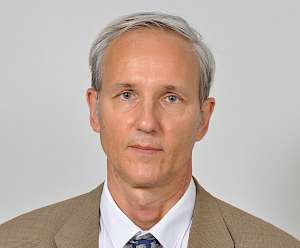 Laurent LE DANOIS, Attaché, Team Leader - Cooperation Delegation of the European Union to India and Bhutan
Laurent le Danois is Attaché, Team Leader of the Cooperation Section at the Delegation of the European Union to India and Bhutan since September 2021. He has over 35 years of experience in development and international cooperation in Central and Eastern Europe, the Indian subcontinent and Africa. He holds key experience in the implementation of health and education policies, political economy analysis, the involvement of civil society in public policies, local governance, social inclusion as well as global partnerships, in particular the Global Fund to fight AIDS, Tuberculosis and Malaria (GFATM) as well as the Global Partnership for Education (GPE) and, more recently, the Coalition for Disaster Resilient Infrastructure (CDRI). He holds a Master of Public Health (MPH) degree from the University of Liverpool. Chiefly engaged in the implementation of the EU Global Gateway Strategy and EU-India Partnerships across sectors, both at policy dialogue and investment level.
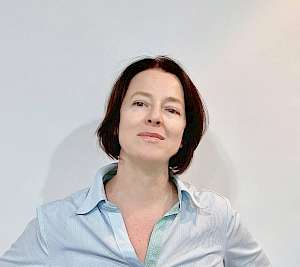 Zinaida FADEEVA, Team Leader, SWITCH-Asia Policy Support Component
Zinaida Fadeeva is the Team Leader of the Policy Support Component of the SWITCH-Asia Programme. Zinaida has over 25 years leading international professional experience in policy for and practice of sustainable consumption and production (SCP) and Education for Sustainable Development, amongst others working with the United Nations University Institute for the Advanced Studies of Sustainability (UNU-IAS). Her work has focused on diverse topics such as tourism, plastics, construction, small and medium enterprises, procurement and lifestyle. Zinaida has worked extensively with governments, private sector, international organisations and academia in East, South East, South and Central Asia.
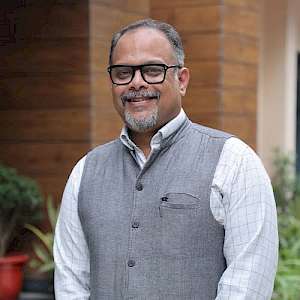 Rijit SENGUPTA, Chief Executive Officer at Centre for Responsible Business (CRB)
Rijit Sengupta is Chief Executive Officer at the Centre for Responsible Business (www.c4rb.org). He holds a postgraduate degree in Agriculture from University of Calcutta, and a postgraduate diploma in Public Systems Management (specialising in Environment Management) from the Indian Institute of Social Welfare and Business Management (IISW&BM), Calcutta. He is an alumnus of the United Nations University (Tokyo) programme on International Co-operation and Development. He has experience of over nineteen years in various areas of sustainable development policy and practice.
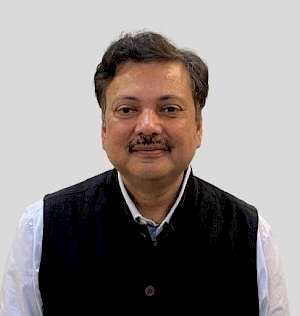 Alok KESARI, Director - Policy Advocacy and Trade Facilitation Federation of European Business in India (FEBI)
Alok Kesari is a senior professional with almost three decades of experience across government institutions, industry bodies, and bilateral development agencies. He currently serves as the Director – Policy Advocacy and Trade Facilitation at the Federation of European Business in India (FEBI). He works closely with the European businesses in India facilitating policy dialogue, ease of doing business, and sustainable industrial growth contributing to an enabling EU - India trade and investment environment.
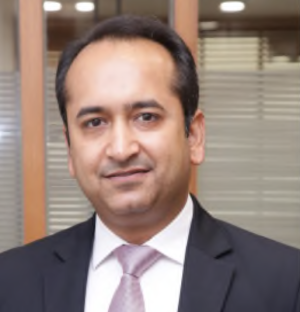 Kunal MAKKAR, Country Director, DEG India
Kunal Makkar has been Country Director of DEG in India since July 2015 and is responsible for business strategy for India and Sri Lanka, new business origination and client relationship management. Prior to this, his role in DEG as Vice President was focussed on investments and investment management in diversified sectors i.e. Manufacturing & Services, Infrastructure and Financial Services. Prior to joining DEG in 2007, he worked with an Indo-Dutch commercial bank ING Vysya Bank in India and worked in equity research, private banking and wholesale banking.
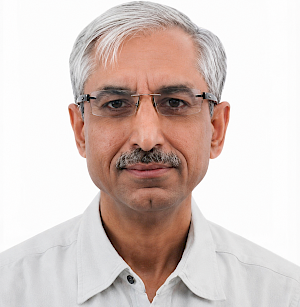 Mukesh GULATI, Executive Director, Foundation for MSME Clusters
Mr. Gulati initiated and contributed substantially to the institutionalization of cluster-based Micro, Small & Medium Enterprise (MSME) policy and implementation framework in India. He also supported similar initiatives in several other developing countries. He coordinated a number of development projects on behalf of the United Nations Industrial Development Organisation (UNIDO) for 12 years (1996-2008) for MSME development. He represented UNIDO on several international forums and also successfully organized more than 25 international training programmes on cluster development over his career. Mr. Gulati has authored several books and publications in the area of MSME development. He also steered the setting up of the Foundation for MSME Clusters in the year 2005 and nurtured it to become a resilient institution that works with a number of multilateral & bilateral donor institutions besides national ministries and development institutions.
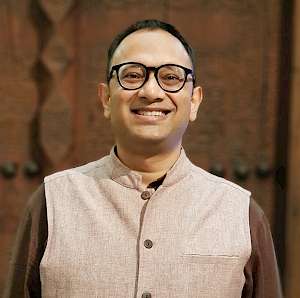 Arnab CHAKRABORTTY, National Director, Empretec India Foundation
Arnab Chakrabortty is a social entrepreneur working at the intersection of sustainable enterprise, behavioural transformation, and systemic scale. As Founder of the Empretec India Foundation, he developed HiEERA — High-impact Entrepreneurs from Emerging Regions for Action — a mindset-driven platform that advances the United Nations Sustainable Development Goals through ethical enterprise, inner clarity, and ecosystem collaboration.
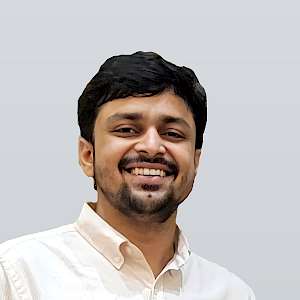 Rushit PANDYA, Chief of Staff, Canvaloop Fibre Pvt. Ltd.
Rushit Pandya is Chief of Staff at Canvaloop Fibre, working directly with the CEO across the business. His remit spans commercial operations, investor relations, business reporting and external representation. He brings over nine years of experience building and scaling commercial organisations, most recently at Refrens, a SaaS company, and before that at CorporateConnections® India.
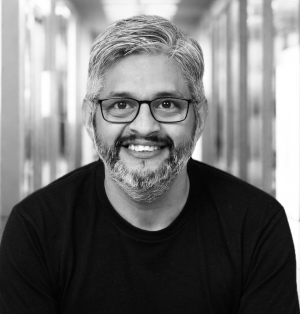 Sumeet POPLI, Founder & CEO, Biome Sustainability Ventures
Sumeet Popli is the Founder of Biome Sustainability Ventures, a materials innovation company focused on transforming agricultural residue into high performance, climate responsible building materials. Biome works at the intersection of circular economy, rural value chains, and sustainable manufacturing by converting farm waste into engineered boards and furniture applications that offer alternatives to timber based and plastic materials. The company addresses interconnected challenges such as stubble burning, deforestation, and material sustainability while creating economic value for agricultural communities.
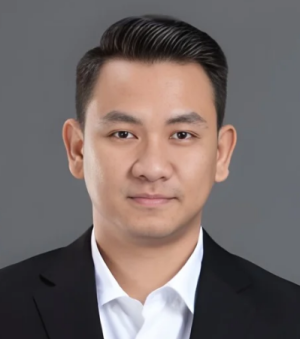 Reksa NIL, Country Director, HUSK Ventures (Cambodia) Co., ltd
Reksa Nil is the Country Director of HUSK Ventures in Cambodia, leading the company’s operations, strategic partnerships, market development, and climate-smart agriculture initiatives. His work focuses on advancing biochar, biochar-based fertilizers, regenerative agriculture, circular economy solutions, and carbon sequestration to improve soil health and farmer livelihoods. He has experience working across the private sector, development programs, government institutions, and agricultural value chains in Cambodia. Reksa is passionate about building partnerships that turn climate and sustainability solutions into commercially viable models that can scale and create lasting impact for farming communities.
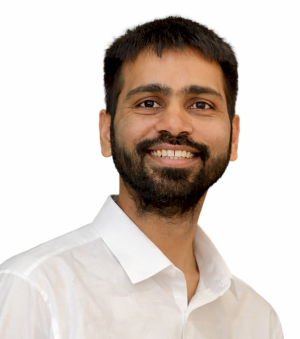 Dr. Akshay JAIN, Co-Founder & CEO, Cancrie
Dr. Akshay Jain is the Co-Founder and CEO of Cancrie, a pioneering cleantech company transforming agricultural waste into advanced carbon nanomaterials for next-generation energy storage. With a PhD in Chemical Engineering from the National University of Singapore (NUS), where he specialised in material innovation and sustainable chemical processes, Dr Jain has spent more than a decade developing technologies that lie at the intersection of circular economy, nanotechnology, and clean energy. His work is guided by a central belief that the waste streams of today can become the high-performance materials of tomorrow — an idea he has successfully turned into a commercially viable reality through Cancrie.
 Devparna ACHARYA, Head of Marketing and Communications at Zerocircle
Devparna Acharya is the Head of Marketing and Communications at Zerocircle, a material science company developing scalable, natural polymer-based alternatives to single-use plastics. With a career that began in journalism, she spent over 16 years working in newsrooms before transitioning into the climate and sustainability space, bringing a strong foundation in storytelling, media, and public engagement. Devparna drives Zerocircle's efforts to create awareness and enable collaborations that accelerate the shift toward natural, microplastic-free materials.
Agenda
Thursday, 17 September 2026 | 14:00 - 16:00 IST (UTC+5:30)
|
Time |
Session |
Content / Format |
Speakers / Contributors |
|
14:00– 14:15 |
Opening and Setting the Scene |
Welcome and introduction. Brief framing of the circular economy as a business and economic transformation. Sets out the central challenge: circular solutions are increasingly visible, but scaling remains difficult. |
|
|
14:15– 15:30 |
Scaling Clinics: Four Circular Businesses |
Four clinics × 15 minutes. Each business presents its circular solution, current implementation, scaling ambition, principal barriers, and what could unlock the next stage. Two matched experts respond to the specific scaling challenge, addressing finance, technology, markets/off-take, capacity, value chains or enabling conditions as relevant. |
Companies
|
|
15:30– 15:50 |
Panel Reflection: What Does It Take to Scale? |
3-4 ecosystem actors draw lessons across the cases: common barriers; where finance can help and where it cannot; technology, off-take and value-chain partnerships; business preparation; and opportunities for EU–Asia partnerships. |
|
|
15:50– 15:55 |
Key Scaling Messages |
|
|
|
15:55– 16:00 |
Closing |
Closing reflections and emphasis on taking relevant partnerships and connections forward beyond WCEF. |
|