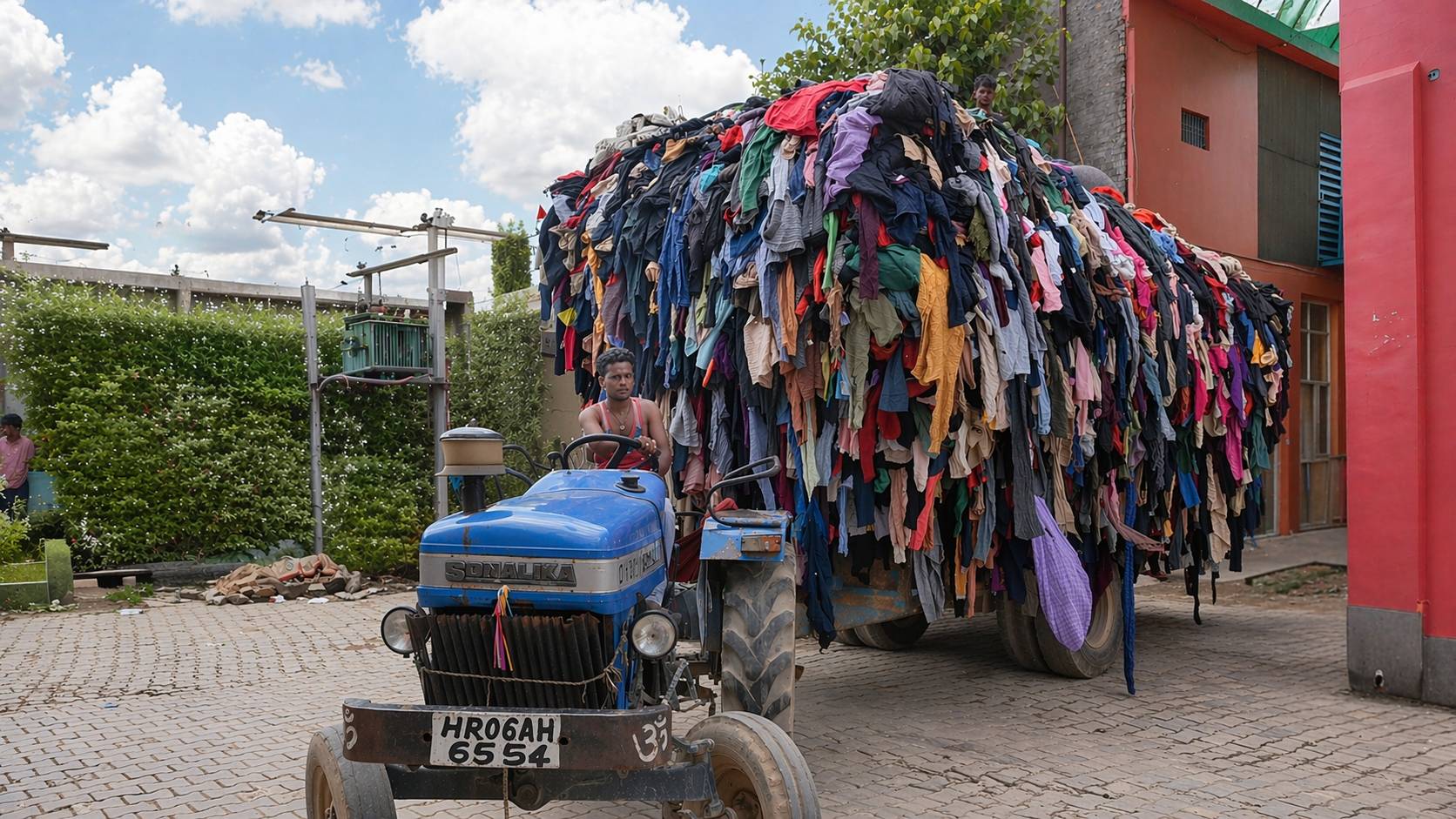
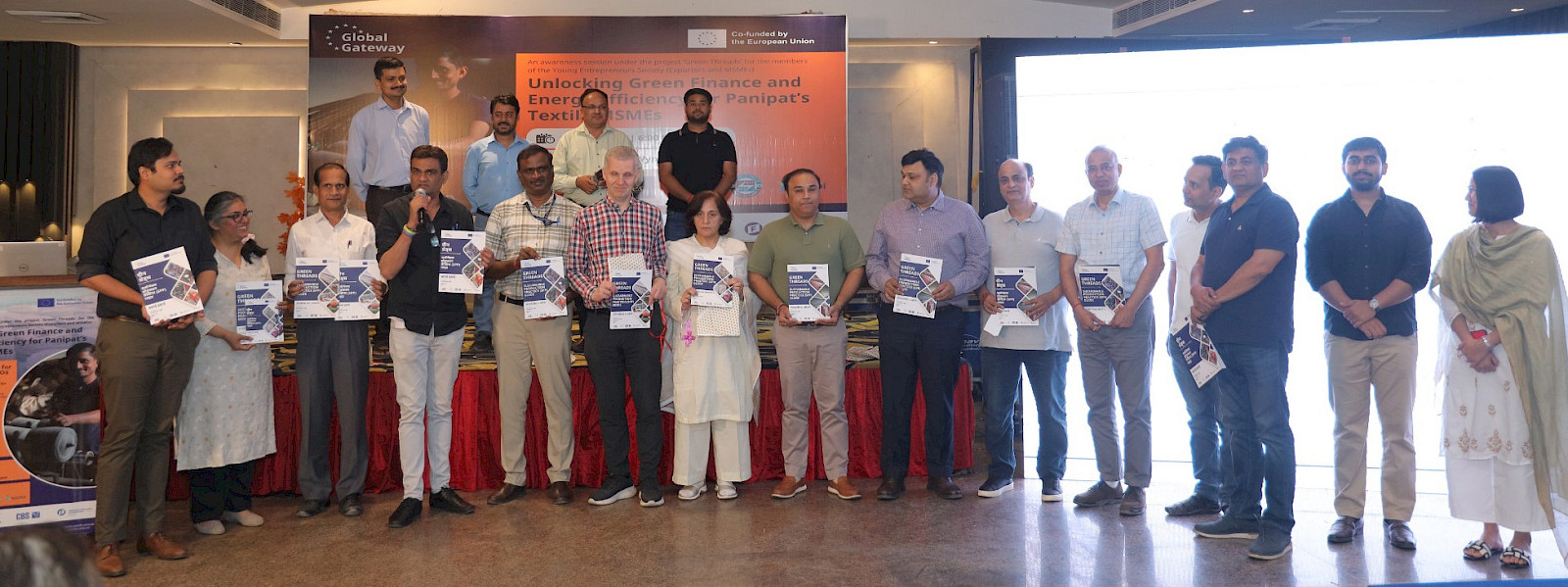
A Green Financing Workshop held in Panipat on 15 April 2026 brought together textile MSMEs, financial institutions, policymakers, and sustainability experts to accelerate the sector’s transition towards circular and resource-efficient production. The event was organised under the EU SWITCH-Asia Green Threads Project in collaboration with the Young Entrepreneurs Society (YES), representing a network of 152 MSMEs and exporters in the textile and home furnishing sector.
The workshop responded to a growing need among small and medium-sized enterprises to access green finance, strengthen compliance with international sustainability standards, and remain competitive in evolving global markets, particularly in light of upcoming European Union regulations.
Strengthening Access to Green Finance and Policy Support
The session was organised by the Foundation for MSME Clusters (FMC), together with consortium partners Copenhagen Business School and the Small Industries Development Bank of India (SIDBI), and featured active participation from key institutions including the Bureau of Energy Efficiency (BEE) and the Haryana MSME Department.
Participants were introduced to a range of green financing instruments offered by SIDBI, including SPICE, EDGE, working capital solutions, machinery loans, and electric vehicle financing. These instruments are designed to support MSMEs in adopting cleaner technologies, improving energy efficiency, and scaling sustainable operations.
The workshop also provided detailed insights into the Bureau of Energy Efficiency’s ADEETIE scheme, alongside state-level support mechanisms under the Haryana Enterprise & Employment Policy (HEEP), the Haryana Textile Policy, and the PADMA Scheme. These initiatives offer incentives such as freight assistance, market development support, quality certification, and subsidies for pollution abatement in textile dyeing units.
 Aligning MSMEs with Emerging EU Sustainability Regulations
A central focus of the workshop was preparing MSMEs for upcoming European Union regulatory frameworks, including the Ecodesign for Sustainable Products Regulation (ESPR), Extended Producer Responsibility (EPR), and the Waste Shipment Regulation (WSR).
Participants were sensitised to the increasing importance of traceability, circularity, and environmental compliance across global value chains. Discussions highlighted how tools such as the Digital Product Passport (DPP) will become critical in demonstrating transparency and sustainability performance, particularly for exporters targeting EU markets.
Launch of Practical Tools for Circular Transition
As a key milestone, the workshop marked the official launch of Sustainable Production Manuals tailored specifically for the Panipat Textile Recycling Cluster. These manuals aim to guide MSMEs in adopting improved production practices, enhancing resource efficiency, and reducing environmental impact.
In parallel, a Digital Product Passport (DPP) pilot programme was launched with support from Green Story. The pilot seeks to strengthen data readiness and traceability of textile waste within the Panipat cluster – an important step towards meeting future regulatory requirements and enabling circular business models.
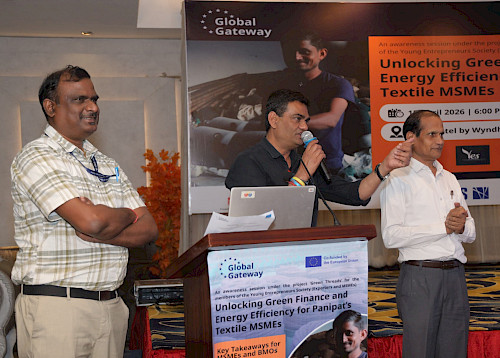
The workshop was inaugurated by Mr. Rajat Grover, President of YES, and brought together a diverse group of stakeholders, including representatives from government, academia, financial institutions, and industry.
Distinguished participants included:
- Mr. P. Shyam Sundar, Director, Bureau of Energy Efficiency
- Mr. Vikas Jangra, Joint Director, Haryana MSME Department
- Ms. Sonica Chabra, Assistant General Manager, SIDBI
- Prof. Peter Lund Thomsen, Copenhagen Business School
- Ms. Uzma, Assistant Professor, Copenhagen Business School
- Ms. Devyani Hari, Senior Director, Center for Responsible Business
Their participation confirmed the strong ecosystem of support available to MSMEs navigating the transition towards sustainable and compliant business practices.
Industry leaders from YES, including Mr. Rajat Grover and former President Mr. Raman Chhabra, reaffirmed their commitment to enabling Panipat’s textile enterprises to adopt sustainable practices and enhance their global competitiveness.
Driving Momentum for Sustainable Transformation
The workshop saw high levels of engagement, with MSMEs expressing strong interest in accessing green finance, improving energy efficiency, and aligning with international sustainability standards. The discussions reflected a growing recognition within the sector that sustainability is no longer optional, but a strategic pathway to resilience and market access. The event concluded with a vote of thanks by Mr. Abhishek Naga, Deputy General Manager at FMC, who acknowledged the active participation of stakeholders and reaffirmed FMC’s commitment to supporting MSMEs in their sustainability journey.
Supporting the Transition Through the Green Threads Project
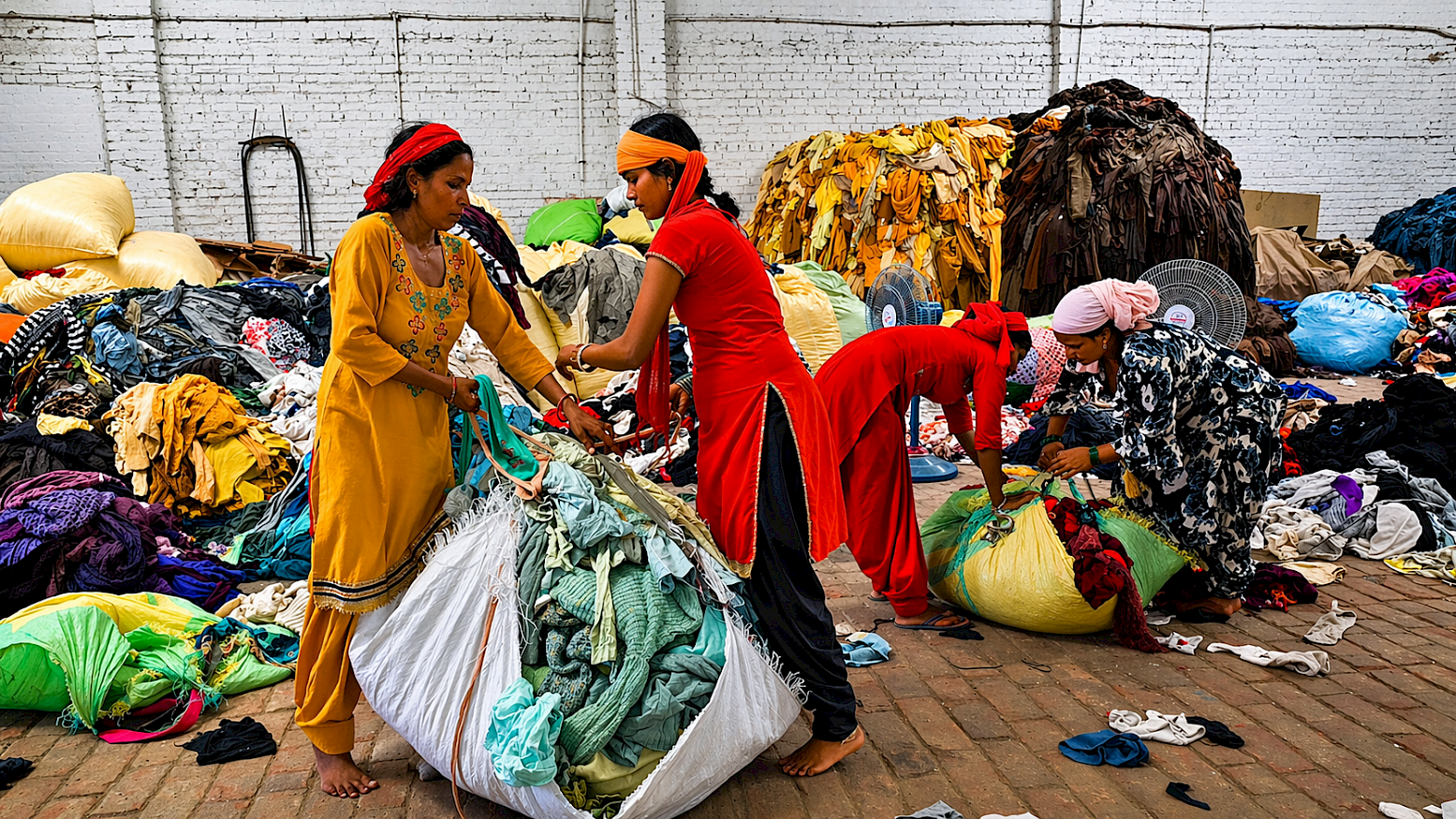
The Green Threads Project, supported by the EU SWITCH-Asia Programme, aims to accelerate the transformation of India’s textile and apparel sector towards circular, resource-efficient, and low-impact production systems.
Through capacity building, policy dialogue, and technical assistance, the project supports MSMEs in:
- Understanding and preparing for EU regulations such as ESPR, DPP, and WSR
- Improving circularity practices, waste management, and product design
- Strengthening competitiveness in international markets
- Building long-term resilience through sustainable business models
Implemented in India by the Foundation for MSME Clusters, the initiative places a strong focus on key textile hubs such as Panipat and Amroha, ensuring that MSME clusters are equipped to adapt to the global shift towards greener manufacturing.
 Media Monitoring
File Name: media_report_-_green_financing.pdf
File Size: 603.71 KB
Media Monitoring
Media Monitoring
File Name: media_report_-_green_financing.pdf
File Size: 603.71 KB
Media Monitoring