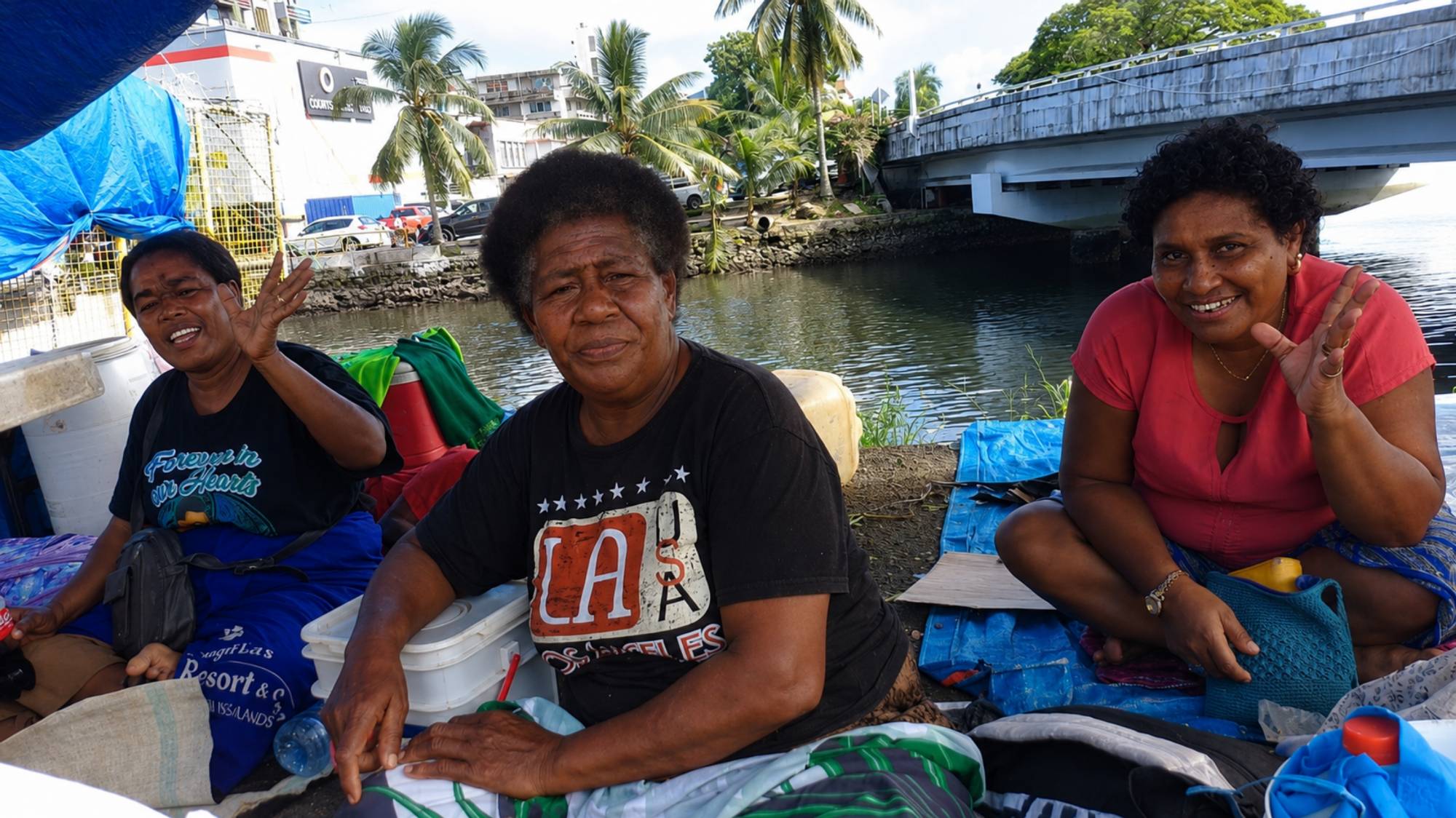
Through the Fiji Blue Fishing project, women from the Ucunivanua community are developing practical, community-led initiatives to strengthen livelihoods, add value to local fishery products, and reduce pressure on marine ecosystems.
For many coastal communities, protecting marine resources is not only a matter of conservation. It is part of everyday life and closely connected to food security, local income, cultural identity and future opportunities for younger generations. Sustainable fisheries, therefore, cannot be built through technical solutions alone. They require approaches that recognise the knowledge, needs and priorities of the communities whose livelihoods depend on the sea.
This is particularly important in contexts where marine areas are traditionally managed by local communities. In Fiji, customary marine areas — known as qoliqoli — are central to the relationship between people, livelihoods and marine ecosystems. Protecting them means not only reducing pressure on marine resources, but also strengthening the capacity of communities to generate fair and sustainable income from the resources they use.
It is from this perspective that the Fiji Blue Fishing project, funded by the EU SWITCH-Asia Programme, has been working alongside local communities to explore how to combine marine ecosystem protection with improved livelihoods, promoting community engagement as an effective way to identify major local challenges and co-design solutions grounded in local knowledge.
Based on this approach, in May 2026 a series of participatory workshops was held with the Women's Club of Ucunivanua, a coastal village in Tailevu Province on Viti Levu, Fiji. The activities brought together twenty-two women who fish, harvest marine products and farm along the village's qoliqoli. Over six structured workshops, the participants worked with the project facilitation team to co-develop practical, community-owned initiatives aimed at adding value to fish products, reducing waste and strengthening local economic opportunities while protecting the village’s qoliqoli. The purpose was not to bring ready-made solutions to the village, but to build them together with the community, starting from their own challenges, knowledge and needs, creating a space where local experience and technical expertise could inform each other.
The preparatory phase adopted a multidisciplinary approach to community engagement mixing consolidated tools for social listening with a flexible and interactive working method, aimed at mutual learning. The training and facilitation team combined knowledge in diverse disciplines such as project management, sociology, marketing, and communication. This mix allowed a multilayer and multifaceted understanding of the workshops’ outcomes, including economic viability of the emerging ideas, the social dynamics of the group, and the market potential of proposed products and solutions. This helped ensure that the resulting initiatives were at once socially grounded, economically sound and ready to reach real customers.
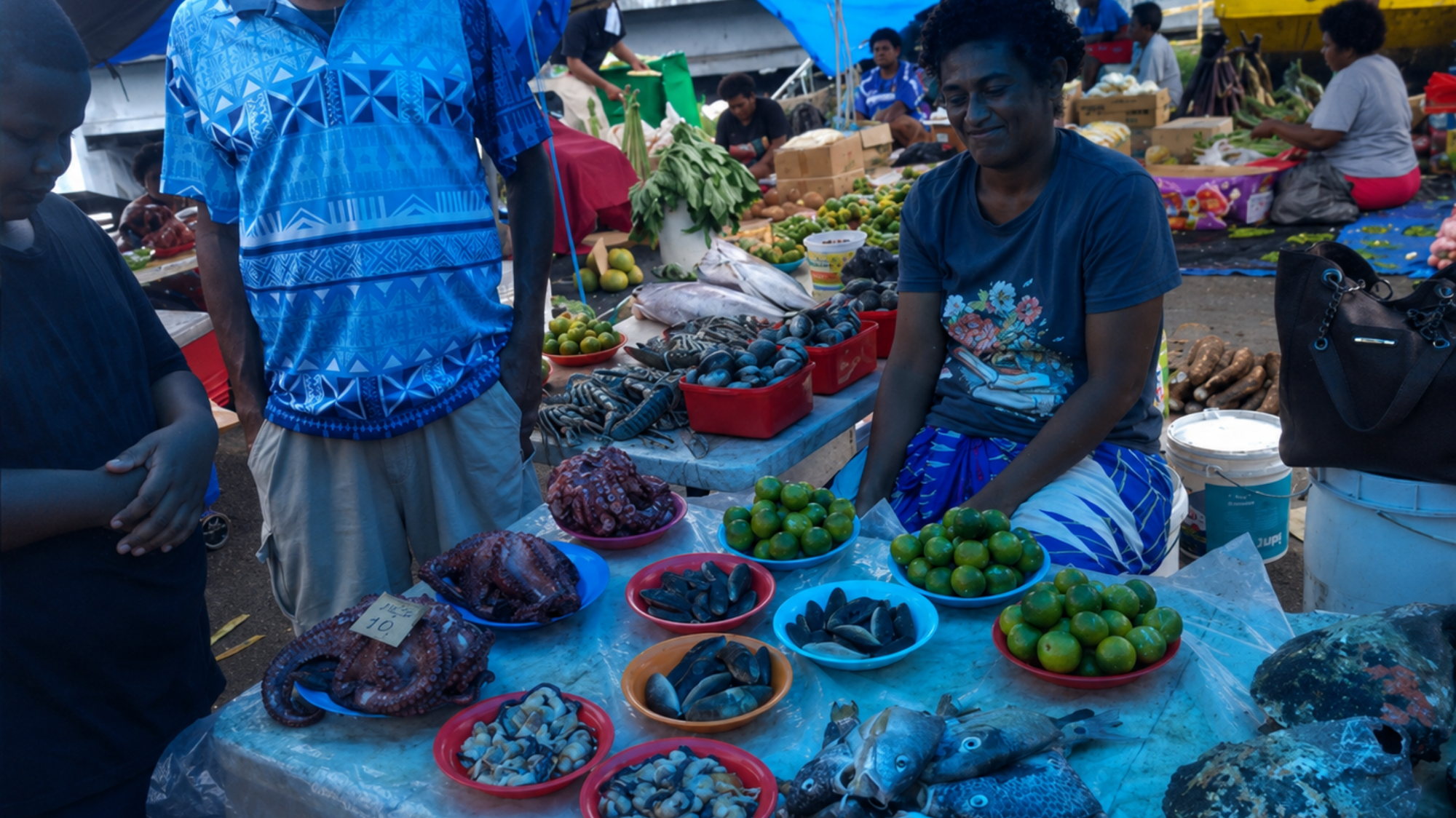
Ucunivanua Women’s Club at the Saturday Suva Market with the FBF team in action. Photos by Gianluigi Negroni
Protecting the qoliqoli, supporting the community
For the people of Ucunivanua, the qoliqoli is far more than a fishing ground. It is a customary marine area cared for by local communities across generations, central to food security, local income, and cultural identity. Protecting the qoliqoli therefore also means supporting the people who manage and depend on it, while creating alternatives that can reduce pressure on marine resources. Indeed, conservation measures that overlook local needs risk being short-lived; lasting protection comes from approaches that communities themselves design, understand and own.
This is the principle at the heart of the work in Ucunivanua. Working with local communities to protect the ecosystem means, first of all, recognising their needs and their skills, and then finding ways to put those skills to better use and meet those needs while achieving the goal of ecosystem protection. The most direct route is to increase the value the community draws from each catch. By processing and differentiating their products, turning fresh fish into higher-value preserved and prepared goods, the women of Ucunivanua can earn the income they need from a smaller volume of fish. Adding value, rather than catching more, is what makes it possible to reconcile sustainable livelihoods with a healthier reef. Less pressure on the ecosystem, more value for the community: the two goals reinforce one another.
Two further ideas strengthen this logic. First, producing goods that keep longer, together with making use of by-products and offcuts, helps to eliminate waste which is a major loss of value. Fish that spoils before it is sold, or parts of the catch that are discarded, represent effort and natural resources thrown away; preserving and processing them turns that loss back into income. Second, pairing a short-term, immediately workable project with a longer-term perspective, informed by the exchange with the expert team, helps the community appreciate the value of protecting the ecosystem over time. Catching a fish before it has had the chance to reproduce may be a gain in the very short term, but it is a significant loss over the medium and long term. Keeping both horizons in view allows immediate needs and long-term stewardship to be reconciled.
In this perspective, Gabriella Esposito, Scientific Coordinator of the Fiji Blue Fishing project, notes:
The experience in Ucunivanua shows that sustainable fisheries solutions are stronger when they are designed with communities, not simply for them. By starting from local knowledge and adding value to fishery products, the project supports a pathway where livelihoods and marine ecosystem protection can advance together.
From local challenges to practical solutions
The workshops were built on the principle of mutual learning. Each session was designed to gather information from the community, to support the participants in analysing their own situation, and then to offer a qualified interpretation of what had emerged, without ever assuming that this interpretation should be accepted as final. The methodology was adapted step by step, evolving through the interaction among participants, with feedback from the community, providing the baseline for the next meeting. Knowledge flowed in both directions: the facilitators brought analytical and technical tools, the community brought lived expertise, and the design took shape through their continuous exchange.
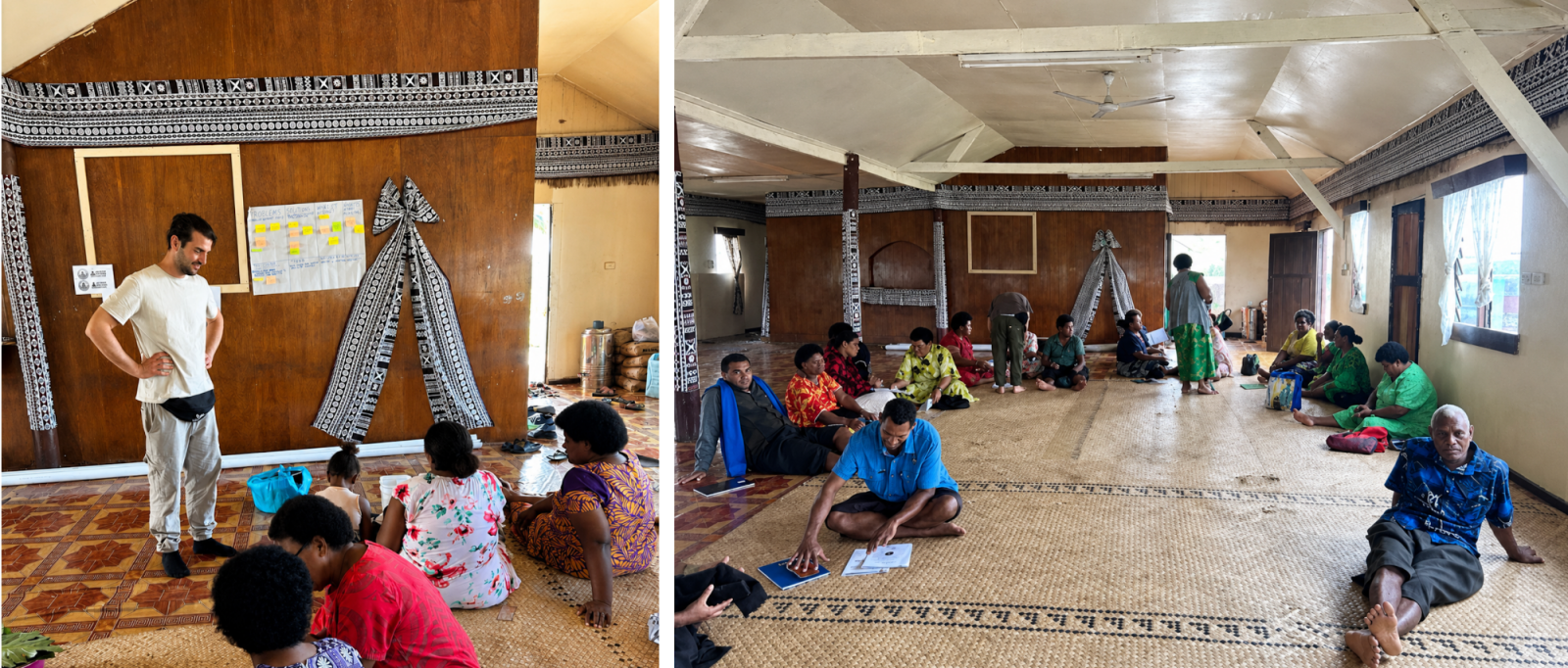
Participatory workshop with the Ucunivanua Women’s Club. Photos by Lorenzo Lodato and Antonio Pone.
In the first rounds, participants mapped their weekly income and expenses and identified who buys their products, revealing both the pressures they deal with — from low prices paid by middlemen to the high cost of transport to market — and the commercial relationships they have built over many years.
The community then carried out a collective analysis of its challenges and goals, highlighting shared causes, effects and aspirations. From this analysis, three project concepts emerged, which the participants reviewed and validated directly, confirming what worked, correcting what did not, and stating what they themselves would be willing to contribute to make each initiative happen.
A breakthrough occurred during the practical demonstration session, in which the women, together with a professional chef, prepared value-added fish products, bringing to life their ideas.
Shared concerns emerged from the participatory process:
- how to reduce waste and spoilage?
- how to gain fair prices?
- how to establish a cooperative?
- and how to transfer this new approach to traditional knowledge and create opportunities for the younger generations?
As one member of the Ucunivanua Women’s Club expressed during the process:
We want to work together to make a better community and support our children in the years to come.
At the same time, issues of food safety, product quality, market access and transport were examined in practical terms, always in relation to the community's own capacity and the health of the qoliqoli.
Sustainable proposals for a stronger fish value chain
The workshops resulted in two complementary community-owned initiatives. The first is an immediately actionable plan to establish a women-led cooperative market operation, enabling the group to process fish into value-added products and to sell them under the community's own brand. The second is a medium-term vision for a more structured village enterprise, including a certified kitchen to produce safe food and a shared transport system in order to access higher-value markets such as hotels, restaurants and supermarkets.
Together, these initiatives are built on the same logic of marine ecosystem protection through added value. By earning more through processing, branding and differentiating fish products, the community can sustain and improve its livelihoods while reducing the fish harvesting volumes as well as pressure on the qoliqoli. The result is a model of community-led resource management in which conservation and economic wellbeing advance together, supported by the community's own governance, skills and sense of ownership.
What next?
The two initiatives have been documented in a formal proposal that the cooperative can develop directly. Indeed, there are concrete possibilities that the Fiji Locally Managed Marine Area (LMMA) network, the local partner in the Fiji Blue Fishing project, will provide funding for the womens cooperative project.
The project aims to replicate the participatory process carried out in Ucunivanua with at least ten further villages and their respective qoliqoli, extending the same community-led, value-adding approach across the wider coastline. In parallel, it will monitor progress and provide initial training to the Ucunivanua cooperative, to ensure that the start-up phase translates into lasting results — a strong, well-governed enterprise capable of serving as a model for the villages that follow.
The outcomes of the first round of listening campaign, including questionnaires and workshops, and the training activities carried out in spring 2026, allowed the research group to better understand the needs and priorities of the communities, adapting the next steps of the project accordingly.
The main challenges expressed by the communities engaged are related to the fishery protection and product differentiation, as well as to securing a healthy food system. These integrated actions will allow the indigenous community to access the higher-value markets and develop branding and marketing opportunities, enhancing both the tangible and intangible cultural value of the qoliqoli.
Future activities will include strategies for optimising fish market accessibility, overcoming mobility issues and exploring differentiation in the transformation of fishery products. Working with six communities, the project aims to increase and valorise added-value products, including jar production, fresh fish and food, aquaculture, cooked food, Agro park and Aqua Park, among others.
By strengthening weak points in the fishery value chain, the Fiji Blue Fishing Project is committed to promoting sustainability and environmental protection for the wellbeing of local communities.
Acknowledgements
This article was prepared by Lorenzo Lodato, Antonio Pone, Valeria Catanese, Gabriella Esposito, Consiglio Nazionale delle Ricerche – Institute for Research on Innovation and Services for Development (CNR IRISS). The authors are grateful to Gianluigi Negroni for sharing insights and materials from the fieldwork.
Learn more about this project here.